

Through mobility initiatives, agreements, and global projects, the Office strengthens international partnerships and expands opportunities
The State University of Maringá (UEM) has consistently expanded its global presence as a result of a structured institutional policy led by the International Cooperation Office (ECI). Responsible for coordinating, promoting, and supporting the University's relations with higher education institutions, research centers, and international organizations, the ECI plays a strategic role in strengthening teaching, research, and outreach from a global perspective.
Among the actions developed by the Office, one of the main objectives is to facilitate the internationalization of the University. As explained by Professor Renato Leão Rego, coordinator of the ECI, the Office does not concentrate all internationalization efforts at the University, but rather creates conditions for them to develop across the Institution, involving faculty, undergraduate and graduate students, and technical-administrative staff. "The Office's work is organized into four main areas: international agreements, academic mobility, internationalization at home, and international projects," he notes.
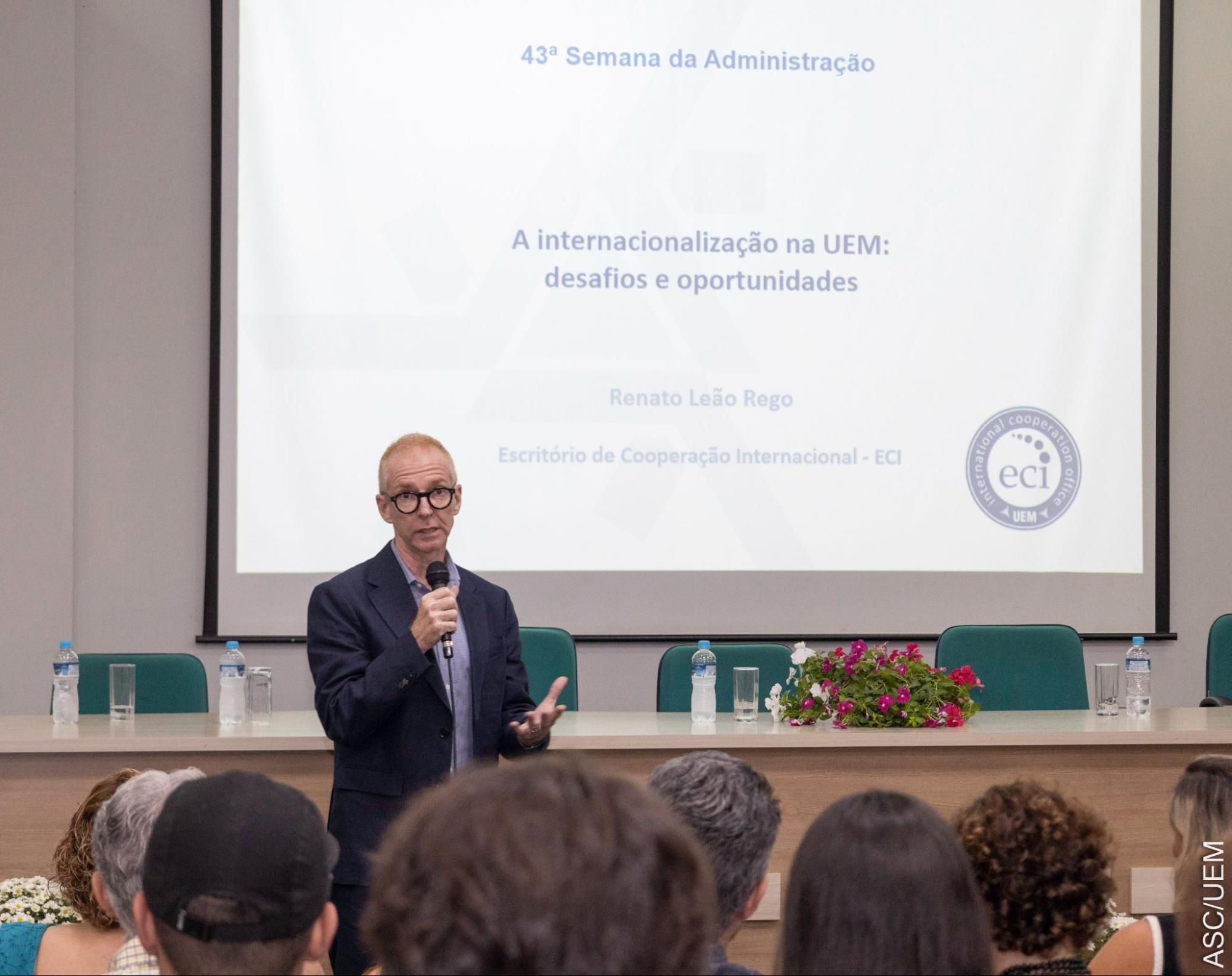
- Professor Renato Leão, from the Department of Architecture and Urbanism at UEM and coordinator of ECI
The Board of International Agreements is responsible for formalizing and institutionalizing UEM's partnerships with foreign universities. Currently, the Institution maintains relationships with partners on every continent, covering more than 30 countries. In 2025, UEM had 129 international agreements in force, an increase over the 106 active agreements recorded in 2024. “These legal instruments guarantee institutional support for mobility activities, access to laboratories, joint research development, dual degree programs, and co-supervision in graduate studies,” explains the coordinator.
Dual degree and cotutelle agreements represent a significant advance in the academic training offered by UEM. At the undergraduate level, dual degrees allow students to complete part of their studies at a partner institution and obtain degrees that are valid in both countries involved. In 2025, eight institutions participated in this type of agreement, while in the previous year there were no records. At the graduate level, cotutelle agreements enable master's and doctoral students to conduct their research under shared supervision between UEM and a foreign university, resulting in internationally recognized degrees.
Academic mobility, coordinated by Professor Lilian Fittipaldi Gardin Berdu, also grew in 2025. During this period, 67 UEM students participated in academic mobility abroad (outbound), while 34 foreign students came to the university to take courses or develop academic activities (inbound). These figures include both in-person and remote formats, as well as government programs such as the Brazilian Program for Exchange Students at Undergraduate Level (PEC-G) and the Brazilian Program for Exchange Students for Portuguese as a Foreign Language (PEC-PLE). Faculty and staff mobility also remained significant, with 55 participants in activities abroad and 22 hosted by UEM.
According to Professor Berdu, head of the Board of Mobility, “the ECI’s work goes beyond selecting and sending students abroad. The Office develops actions to welcome and integrate international students even before their arrival in Brazil, through a tutoring program that involves UEM students, who are prepared to assist with academic and everyday demands, such as housing, transportation, and cultural adaptation. In addition, regular meetings and welcoming groups promote integration between Brazilian and foreign students, strengthening the multicultural environment on campus," she notes.
Internationalization at home is another central focus of the ECI's work, directly impacting the academic experience of those who do not participate in activities abroad. In 2025, UEM offered 43 academic and outreach courses in other languages, more than double the 21 offered in 2024. In the same period, five courses directly linked to curricular internationalization initiatives were also offered. These activities include elective academic courses, outreach courses, and joint initiatives with foreign professors, often conducted virtually, allowing interaction among students from different countries.
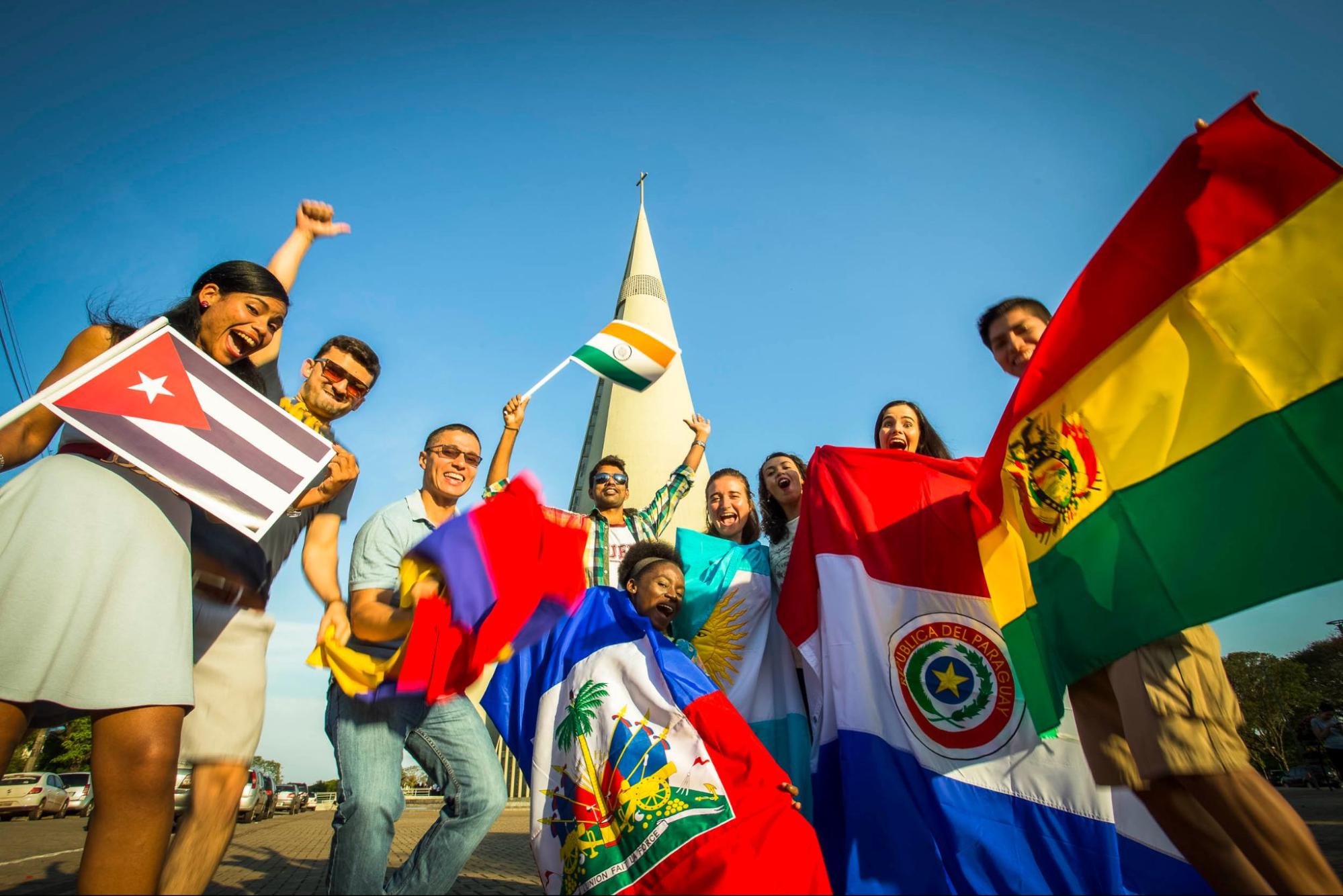
- International students at the Cathedral Square in Maringá
In this context, the International Visiting Professors program stands out as an initiative funded by the University's own resources. In 2025, UEM welcomed 33 visiting professors from various countries, a significant increase compared to the previous year, when two foreign professors participated in similar activities. These professors taught courses in other languages, delivered lectures open to the academic community, and carried out research activities, contributing to the circulation of knowledge and the strengthening of the University's international networks.
Outreach and language support initiatives are also part of the internationalization policy. In 2025, the Portuguese as an Additional Language course, offered by the ECI, served a total of 198 students, including international students, members of the broader community, and candidates preparing for Portuguese language proficiency exams. The initiative reinforces UEM’s commitment to cultural integration and to internationalization as an inclusive and socially engaged practice.
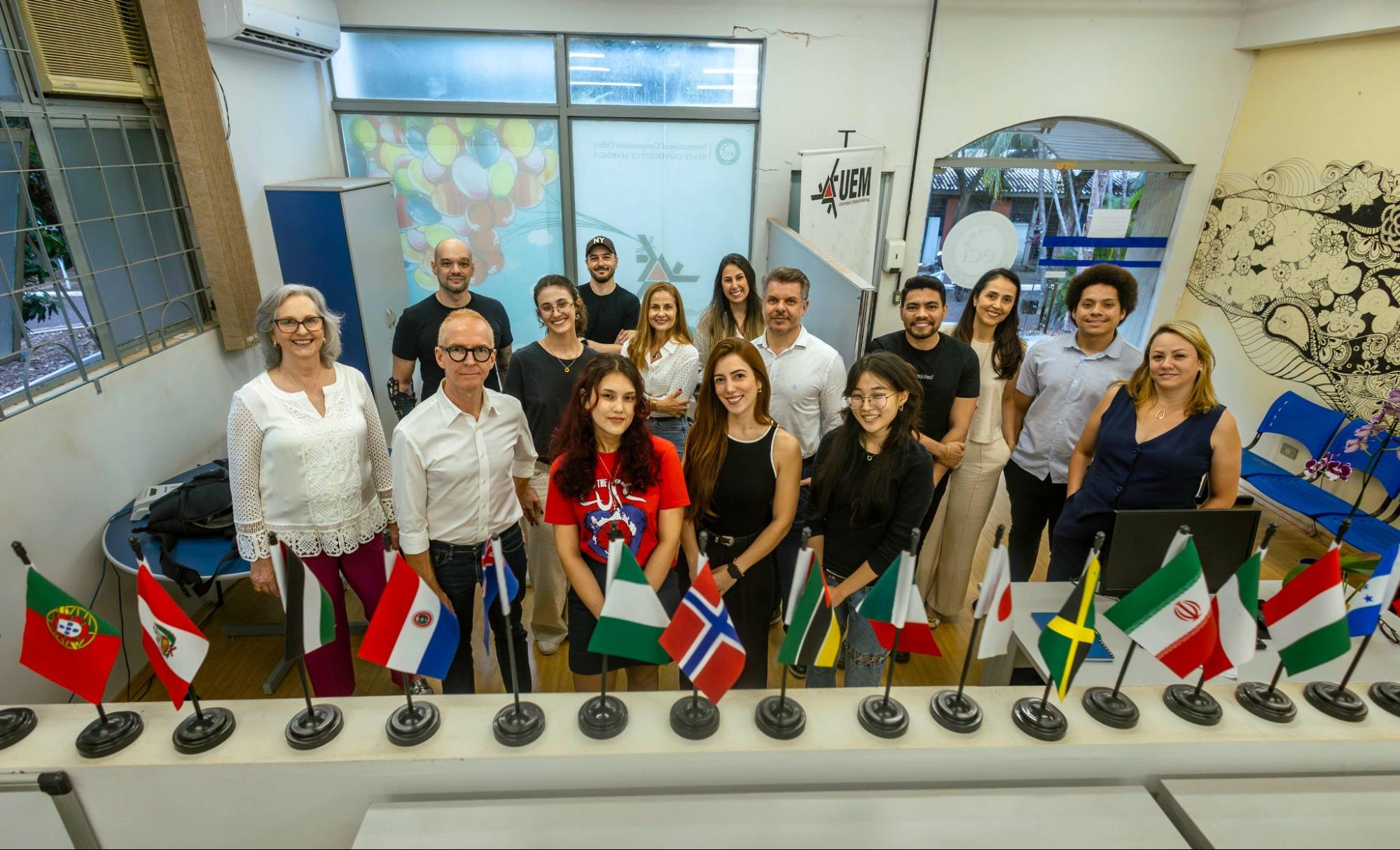
- Members of the ECI team in 2025
In the field of research, indicators point to the strengthening of international partnerships. In 2025, UEM participated in 18 international collaborative projects, four of which received external funding, in addition to producing 14 academic outputs, including articles, book chapters, and papers presented at scientific events. According to Renato Leão, “these results reflect a concept of internationalization focused on the development of global skills, the qualification of scientific production, and the inclusion of UEM researchers in international networks, rather than simply seeking better positions in rankings,” he emphasizes.
Institutional investment has kept pace with this growth. In 2025, UEM invested more than R$ 957,000 of its own funds in internationalization, in addition to contributions from the State Secretariat for Science, Technology, and Higher Education (Seti) and other development programs, totaling nearly R$ 1.5 million invested. These resources enabled the expansion of calls for proposals, scholarship programs, and structural actions, such as the internationalization of curricula, an initiative that will begin to be implemented on a pilot basis in 2026.
The visibility of ECI's actions has also grown significantly. In 2025, the Office's Instagram profile reached over 739,000 views, while the institutional website recorded nearly 40,000 visits, highlighting the increased demand for information and international opportunities from the academic community.
With calls for applications for 2026 already open, including scholarships for visiting professors, courses in other languages, and mobility programs focused especially on Latin America, the ECI reaffirms its role in coordinating UEM’s global engagement. By promoting international connections, the ECI directly contributes to the education of professionals prepared to work in global contexts, strengthening the public university's mission to produce knowledge, educate citizens, and expand its social impact beyond national borders.
How to contact the ECI
To keep up with the actions, calls for proposals, and internationalization opportunities at the State University of Maringá, the International Cooperation Office offers different service and communication channels:
Instagram: @eci.uem
Website: eci.uem.br
Telephone: (44) 3011-4441
Listen to the full interview on UEM FM:
Translation team:
Felipe Amorim Piva
Julia Pedriali Rosa